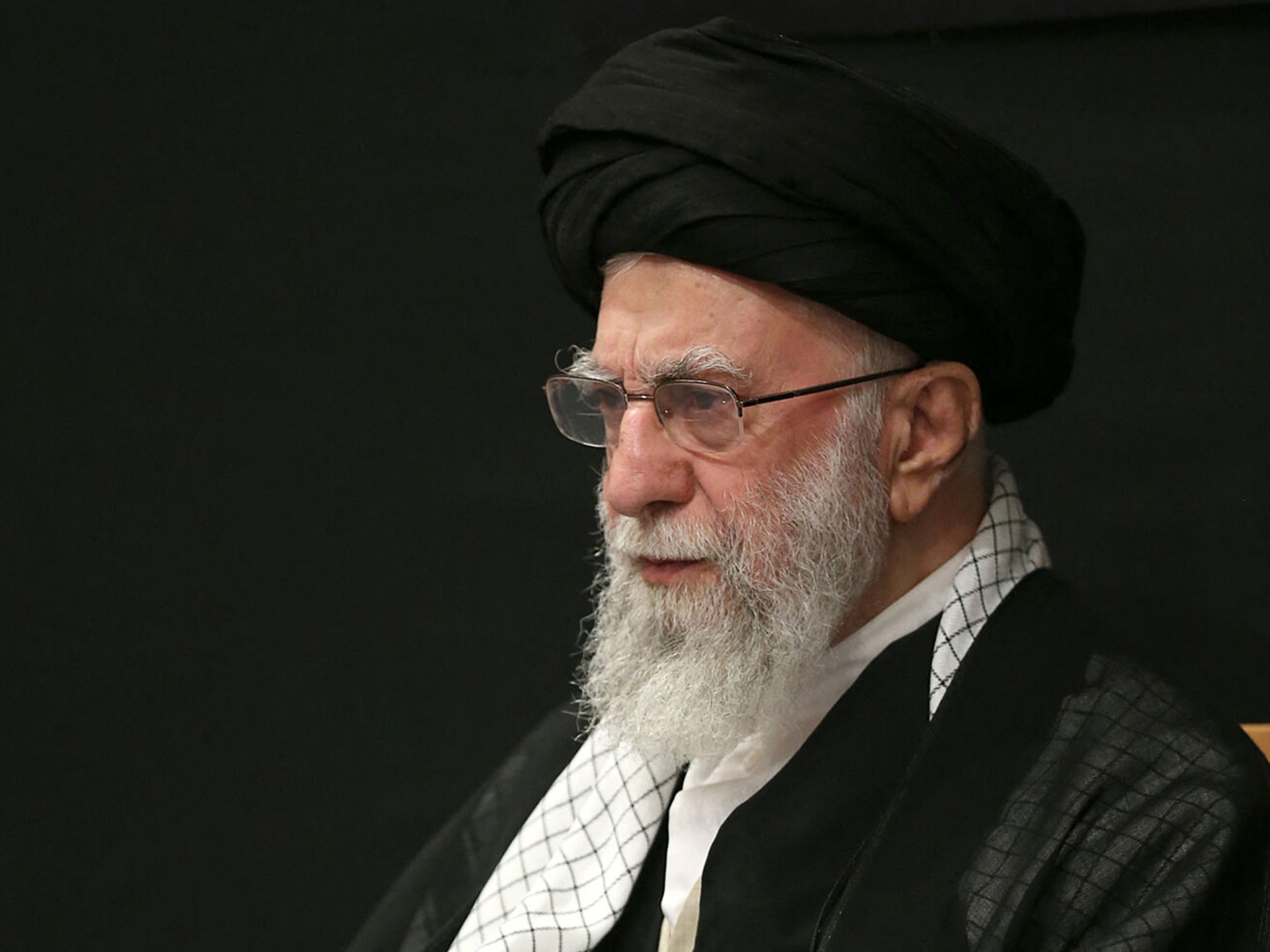
The sudden death of Ayatollah Ali Khamenei, Iran's long-serving Supreme Leader, has sent shockwaves across the Middle East and the global geopolitical landscape. For over three decades, Khamenei stood at the helm of the Islamic Republic, a figure synonymous with its revolutionary ideals, its staunch defiance of Western influence, and its complex domestic challenges. His unexpected assassination in a meticulously executed US and Israeli airstrike marks a watershed moment, fundamentally reshaping the trajectory of a nation already grappling with profound internal unrest and external pressures. This article delves into the sophisticated intelligence operation that culminated in the demise of one of the world's most enduring and enigmatic leaders, exploring the precision, the consequences, and the uncertain future now facing Iran After Khamenei: The Looming Succession Crisis.
A Reign Defined by Revolution and Repression
Ayatollah Ali Khamenei's ascent to power followed the death of revolutionary leader Ruhollah Khomeini in 1989. Prior to that, he had served as Iran's president since 1981, playing a crucial role in the Islamic revolution that overthrew the Iranian monarchy in 1979. His tenure as Supreme Leader was characterized by both resilience and controversy. He is often credited with guiding Tehran through the brutal eight-year war against Iraq in the 1980s and cultivating an economy that, despite crippling Western sanctions, managed to persist.
However, the latter part of his reign was increasingly marred by widespread domestic discontent. Mass protests against alleged rigged elections, rampant human rights violations, and persistent economic hardship became a recurring feature of the Iranian political landscape. Most recently, demonstrations in December and January, initially sparked by shopkeepers protesting inflation in Tehran, rapidly escalated into nationwide calls for regime change. These protests were met with brutal force by state security forces, leading to confirmed massacres and further deepening the chasm between the populace and the ruling establishment. The mounting internal pressure, coupled with a history of strategic maneuvering, defined the latter years of Khamenei's Death: A New Era for Iran Amidst Unrest.
The Intelligence Coup: Unveiling the Supreme Leader's Location
The successful targeting of Iran's Supreme Leader, Ayatollah Ali Khamenei, was not an act of random aggression but the culmination of a highly sophisticated and precise intelligence operation. For months, whispers of Western powers intensifying their surveillance on key Iranian figures had circulated, but the accuracy and timing of this particular strike revealed an unparalleled level of intelligence penetration.
According to reports from anonymous sources familiar with the operation, cited by outlets like The New York Times and CBS, the US Central Intelligence Agency (CIA) played a pivotal role. The CIA had reportedly gathered critical information detailing a high-level meeting scheduled for Saturday morning in Tehran. This gathering was expected to include Khamenei himself and other senior military cadres, signifying a rare opportunity to target the heart of Iran's command structure.
The crucial piece of intelligence was not just the fact of a meeting, but its precise location: a central Tehran compound that houses not only the offices and residence of the Supreme Leader but also those of Iran’s president and the country’s National Security Council. This highly secure and symbolically significant location became the focal point of the intelligence efforts. Once this invaluable location data was confirmed, the CIA swiftly shared the intelligence with its strategic ally, Israel. This collaboration underscored the depth of the US-Israel intelligence alliance, demonstrating a formidable capacity to gather and act upon sensitive information even within the most fortified environments of the Islamic Republic.
The Precision Strike: How the Operation Unfolded
With the intelligence in hand, the joint US and Israeli forces launched their coordinated airstrikes. The assault took place on Saturday morning, specifically around 9:40 AM Tehran time (06:10 GMT). The chosen target was the very compound identified by the CIA, a location known to house the top echelons of Iranian power. Ayatollah Khamenei was reportedly killed early in these strikes, alongside several senior military officials, including key figures from the elite Iranian Revolutionary Guard Corps (IRGC) – an organization central to Iran's military and internal security apparatus.
The immediate aftermath was devastating. By Monday, the Iranian Red Crescent reported a confirmed death toll of 787 people across the country. Tragically, the strikes also impacted civilian areas; at least 165 schoolgirls and staff were killed in a strike on a school in the southern Minab city on Saturday. While the primary target was the leadership, the broader impact on the civilian population highlighted the severe human cost of the escalating conflict.
Beyond Khamenei: Iran's Uncharted Path Ahead
The assassination of Ali Khamenei represents the most significant rupture in the Islamic Republic's political system since the death of Ayatollah Ruhollah Khomeini in 1989. Unlike the relatively managed transition that followed Khomeini's passing, the current succession occurs amidst a volatile mix of acute domestic unrest, a crippling economic crisis, and unprecedented external military pressure. The path forward for Iran After Khamenei: The Looming Succession Crisis is fraught with uncertainty and profound implications.
For some time, the question of succession had revolved around potential individuals like Khamenei's son, Mojtaba, or the now-deceased former President Ebrahim Raisi. However, the recent surge of protests in January, which prompted US President Donald Trump to publicly suggest openness to regime change, significantly shifted the dynamics. This external pressure, coupled with the internal dissent, reportedly compelled Khamenei to appoint Ali Larijani, a former IRGC general and secretary of the Supreme National Security Council, to effectively run the country in the interim. The extraordinary capture of Venezuelan President Nicolás Maduro just weeks prior had no doubt also weighed heavily on Ayatollah Khamenei's mind, perhaps signaling the increasing vulnerability of long-standing leaders.
The Geopolitical Ripple Effect: A New Calculus
The intelligence coup leading to Khamenei's death sends a powerful message about the capabilities of the US-Israel alliance. It underscores a strategic shift towards more direct and decisive action against perceived threats, demonstrating an unprecedented willingness to target even the highest echelons of adversary leadership. This act of war, rather than internal revolution or natural causes, dramatically alters the calculus for both regional and international players.
For the United States, it potentially reaffirms a hardline stance against Iran, fulfilling past rhetoric about the possibility of regime change. For Israel, it represents a significant blow to its primary regional adversary. However, the long-term implications are complex. While a major figure is removed, the power vacuum could lead to unpredictable outcomes, potentially intensifying internal power struggles within Iran, or, conversely, unifying factions against a common external enemy. The region now faces a period of heightened instability, with questions lingering about potential retaliatory actions, the future of Iran's nuclear program, and the trajectory of proxy conflicts across the Middle East. The global community watches closely as Khamenei's Death: A New Era for Iran Amidst Unrest unfolds.
Conclusion
The assassination of Ayatollah Ali Khamenei through precise US and Israeli intelligence and airstrikes marks a monumental turning point for Iran and the broader Middle East. It highlights the formidable capabilities of intelligence gathering and targeted military action in an era of complex geopolitical rivalries. While it brings an end to a controversial and lengthy reign, it simultaneously ushers in an era of profound uncertainty for the Islamic Republic. The immediate challenge of managing the succession amidst deep domestic unrest and external pressure will define Iran's trajectory for years to come, with far-reaching consequences for regional stability and international relations.